

BLOG
MIT Researchers Just Discovered an AI Mimicking the Brain on Its Own, by Eric Beyer
“While AI has yet to attain human-like cognition, artificial neural networks that replicate language processing — a system thought to be a critical component behind higher cognition — are starting to look surprisingly similar to what we see taking place in the brain.”
“In November, a group of researchers at MIT published a study in the Proceedings of the National Academy of Sciences demonstrating that analyzing trends in machine learning can provide a window into these mechanisms of higher cognitive brain function. Perhaps even more astounding is the study’s implication that AI is undergoing a convergent evolution with nature — without anyone programming it to do so.“
“Artificial intelligence powered by machine learning has made impressive strides in recent years, especially in the field of visual recognition. Instagram uses image recognition AI to describe photos for the visually impaired, Google uses it for its reverse-image search function, and facial recognition algorithms from companies like Clearview AI help law enforcement agencies match images on social media to those in government databases to identify wanted individuals.”
“One of the reasons the study is so fascinating is that these insights into cognition simultaneously point to a kind of ‘AI evolution’ that’s taking place, one that has until recently gone unnoticed. It’s important to remember that nobody intentionally programmed any of these models to act like the brain, but over the course of building and upgrading them, we seem to have stumbled into a process a bit like the one that produced the brain itself.”
MGM Lets Potential Employees Try Out Jobs in VR Before Signing On, by Steve Dent

“MGM Resorts is letting applicants try out casino and hotel jobs in virtual reality (VR) before signing on, Business Insider has reported. It's part of a new effort to reduce employee attrition during the ‘great resignation’ that has caused labor shortages in the US and elsewhere during the COVID-19 pandemic.”
“The casino and resort group is using headsets from a VR company called Strivr that specializes in virtual training for industry health and safety, customer service and more. The idea is to let employees experience typical job activities so that they know what to expect. ‘It can be very difficult just to verbally explain the types of positions or show a video,’ MGM Resorts' chief HR officer Laura Lee told BI. Using VR, by contrast, lets applicants ‘throw a headset on and really experience the job.’”
“The negative interactions could discourage some candidates, but MGM expects that it would also allow for better hiring decisions. The use of the tech ‘might've resolved some turnover we experienced when people accepted positions and then realized it wasn't quite what they thought it would be,’ said Lee.”
CNET Names the Best Tech Products of 2021, By Jason Hiner
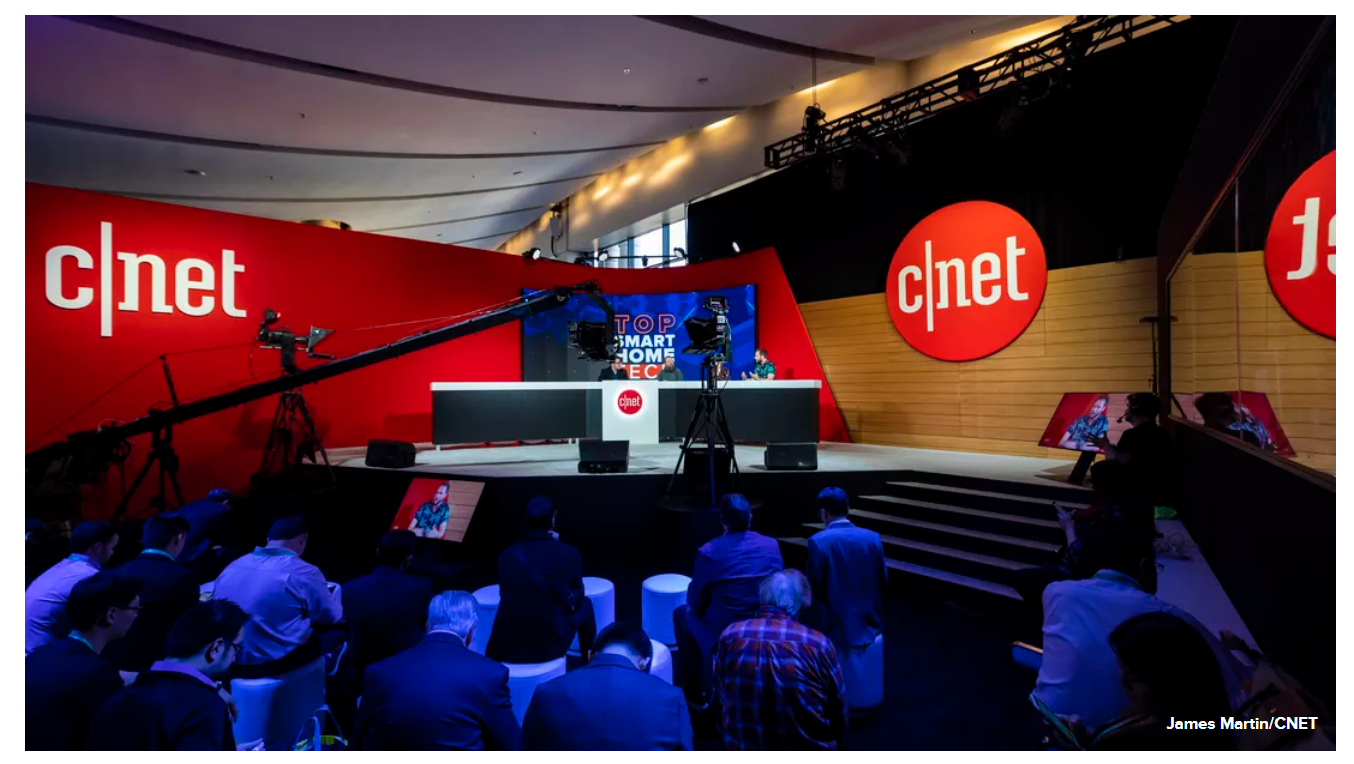
“While 2021 wasn't 2020 -- there was no global recession and there were fewer restrictions on activity -- it was still a challenging year for companies launching new tech products. The worldwide chip shortage and the supply chain crisis tied the hands of tech companies. Plus, consumers loaded up on so much tech last year that demand wasn't as brisk for some products in 2021. Nevertheless, the bullet train of innovation kept racing forward and there were billions of people buying tickets for a ride.”
“As we do each year, CNET evaluated the most important products in the biggest categories in consumer tech. Our goal is to find the most recommendable product in each category and subcategory and designate it as the CNET Editors' Choice. The end result is always to provide the clearest and most useful advice to our audience.”
‘He Touched a Nerve’: How the First Piece of AI Music Was Born in 1956, by Jeff Gage
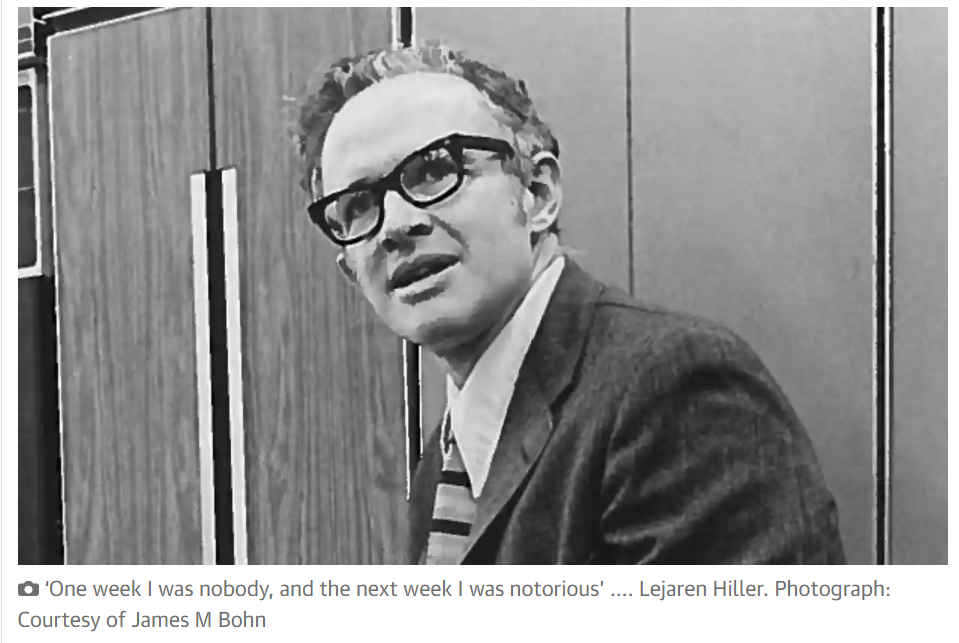
“On the evening of 9 August 1956, a couple of hundred people squeezed into a student union lounge for a concert recital at the University of Illinois Urbana-Champaign, about 130 miles outside Chicago. Student performances didn’t usually attract so many people, but this was an exceptional case, the debut of the Illiac Suite: String Quartet No 4, that a member of the chemistry faculty, Lejaren Hiller Jr, had devised with the school’s one and only computer, the Illiac I.”
“Decades before today’s artificial intelligence pop stars, Auto-Tune and deepfake compositions was Hiller’s piece, described by the New York Times in his 1994 obituary as ‘the first substantial piece of music composed on a computer’ – and indeed by a computer.”’
“Hiller, the man primarily responsible for the Illiac Suite, became an overnight celebrity, appearing in Time magazine and Newsweek. ‘I went from total obscurity as a composer to really being on the front page of newspapers all over the country,’ he told an interviewer in 1983. ‘One week I was nobody, and the next week I was notorious.’ Biographer James Matthew Bohn recalls stories of Hiller’s phone ‘ringing almost off the hook’ in the aftermath of the performance. ‘He was very famous for 15 minutes,’ Bohn says.”’
“The Illiac Suite stands today as a monument to a certain postwar epoch, one where structuralist philosophies could be wed with digital technology and rule-based, mathematical songwriting techniques that date back as far as ancient Greece. “It’s a landmark piece in the development of the use of algorithmic thinking in music, which is now everywhere,” says Rosenboom. ‘Do I put it on and listen to it as dinner music? Not necessarily. But I think it was a very important experience in thinking about the musical form, and what that form can tell us and not tell us.’ Bruce is more succinct: ‘I love the piece,’ he says. ‘I think it’s fantastic.”’
Twitter’s Leadership Shakeup Comes at a Critical Moment, by Queenie Wong
“When co-founder Jack Dorsey returned to Twitter as chief executive in 2015, he made it clear the social media company needed to constantly reinvent itself.“
“On Monday, Dorsey handed that undertaking to Parag Agrawal, Twitter's chief technology officer and an architect of the company's effort to create a decentralized and open standard for the social media industry. The 10-year Twitter veteran, who has a Ph.D. from Stanford and an undergraduate degree from the prestigious Indian Institute of Technology, as the new CEO will now have to balance the projects that set the company up for the future with the daily challenges of a social media platform that is under scrutiny from investors, lawmakers and activists.”
“‘Twitter is in the midst of shaking up its business model,’ Jasmine Enberg, a senior analyst at eMarketer, said in a statement. ‘The ad world is facing real challenges with the new targeting and privacy initiatives, and Twitter is experimenting with new revenue streams to augment its ads business and meet the aggressive revenue goals it set last February. The next CEO will have to face the challenge of making good on those goals.”’
“Twitter's business challenges include issues beyond its control. Changes that Apple introduced to improve privacy on its iOS mobile operating system have made it tougher for advertisers to measure the effectiveness of their marketing campaigns. That's affected revenue at social media companies, including Twitter. The company hasn't detailed how badly Apple's changes have affected its business, but acknowledged they had a "modest" impact on its third-quarter revenue.”
“Outside of business, Twitter and other social networks have been dealing with criticism from lawmakers and advocacy groups.”
“In March, Dorsey appeared alongside Facebook CEO Mark Zuckerberg and Google CEO Sundar Pichai at a testy congressional hearing on misinformation, tech addiction and the impact tech companies have on children's screen time. Members of Congress repeatedly interrupted the executives, who avoided providing yes or no answers to questions.”
Artificial Intelligence That Understands Object Relationships, by Adam Zewe
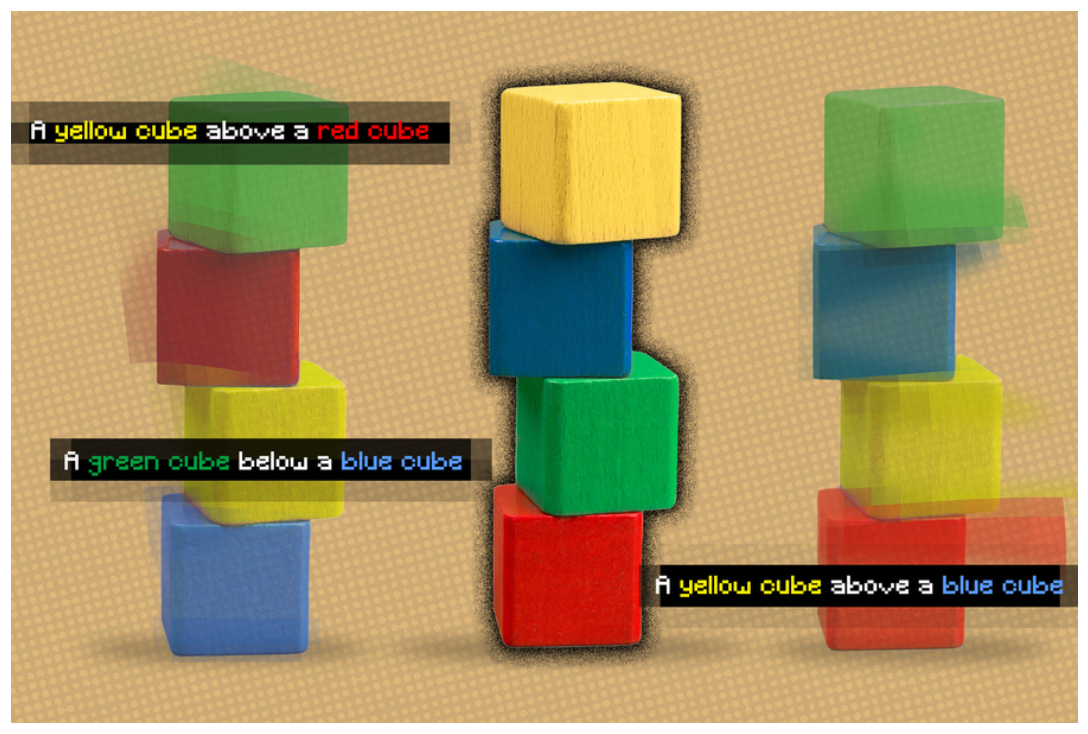
“When humans look at a scene, they see objects and the relationships between them. On top of your desk, there might be a laptop that is sitting to the left of a phone, which is in front of a computer monitor.”
“Many deep learning models struggle to see the world this way because they don’t understand the entangled relationships between individual objects. Without knowledge of these relationships, a robot designed to help someone in a kitchen would have difficulty following a command like ‘pick up the spatula that is to the left of the stove and place it on top of the cutting board.”’
“In an effort to solve this problem, MIT researchers have developed a model that understands the underlying relationships between objects in a scene. Their model represents individual relationships one at a time, then combines these representations to describe the overall scene. This enables the model to generate more accurate images from text descriptions, even when the scene includes several objects that are arranged in different relationships with one another.”
“This work could be applied in situations where industrial robots must perform intricate, multistep manipulation tasks, like stacking items in a warehouse or assembling appliances. It also moves the field one step closer to enabling machines that can learn from and interact with their environments more like humans do.”
What Is the Metaverse? A Deep Dive Into the ‘Future of the Internet’, by Monica J. White

“At its most basic, the metaverse is a virtual reality that allows people from all over the world to interact, both with each other and with the metaverse itself. Users are often allowed to obtain items that remain theirs between sessions, or even land within the metaverse. However, there are many ways to interpret that concept, and it has evolved greatly over the years.”
“On the internet, we’re always interacting with something — be it a website, a game, or a chat program that connects us to our friends. The metaverse takes this one step further and puts the user in the middle of the action. This opens the door to stronger, more realistic experiences that simply browsing the web or watching a video fail to evoke very often, if ever.”
“Technically, every game could be considered a metaverse, and the metaverses that various tech giants are working on can all include some aspects of gaming. However, the idea of the metaverse is much broader than just that of a video game. The metaverse is meant to replace, or improve, real-life functionality in a virtual space. Things that users do in their day-to-day life, such as attending classes or going to work, can all be done in the metaverse instead.”
“…every company has a different take on the metaverse. Facebook is working on Horizon Worlds, Nvidia has its Omniverse, and much smaller fish in this very big pond are also joining in. The cryptocurrency world has metaverses of its own.”
”The general purpose of the metaverse is to connect with others through a virtual, shared universe. Be it for work, self-improvement, or simply entertainment, the metaverse exists to breach the borders of reality and distance, connecting people from all over the globe.”
“One thing is for sure — it’s difficult to deny that the metaverse is no longer a wild concept pulled straight out of a sci-fi film. Facebook/Meta has just added fuel to a fire that has already been burning, and in a few years, we may be seeing the metaverse utilized in ways we previously haven’t even thought possible.”
Quera Computing Emerges From Stealth With $17M to Launch Quantum Device, by Kate Park
“QuEra Computing, a Boston-based quantum computer developer, is coming out of stealth mode today with $17 million in funding from Rakuten, Day One Ventures and Frontiers Capital. Angel investors Serguei Beloussov and Paul Maritz also joined in the round.”
“The startup, which has built a commercially accessible quantum device, will use the fresh capital to develop customized algorithms to leverage the power of its architecture on quantum optimization and quantum simulation.”
“The QuEra team is building the world’s most powerful quantum computers to take on computational tasks that are currently deemed impossibly hard, Keesling said.”
“QuEra has completed the construction of their first 256-qubit device, which will soon be accessible to customers. The device holds the promise to prove useful today — not years from now — by targeting applications in quantum optimization and quantum simulation. According to the company, this is QuEra’s first step toward addressing today’s ‘impossible problems’ in materials, finance, chemistry, logistics, pharmaceuticals and more.”
Eyes of the City: Visions of Architecture After Artificial Intelligence, by Daniele Belleri, Valeria Federighi, and Monica Naso

“This book tells the story of Eyes of the City—an international exhibition on technology and urbanism held in Shenzhen during the winter of 2019 and 2020, with a curation process that unfolded between summer 2018 and spring 2020.”
“Jointly curated by CRA-Carlo Ratti Associati, Politecnico di Torino and South China University of Technology, it focused on the various relationships between the built environment and increasingly pervasive digital technologies—from artificial intelligence to facial recognition, drones to self-driving vehicles—in a city that is one of the world’s leading centers of the Fourth Industrial Revolution.”
“The Biennale opened its doors in December 2019, just after the months-long protests in Hong Kong had reached their climax and the discussion on the role of surveillance systems embedded in physical space was at its most controversial.”
In Camden, Bridging the Skills Gap Means More than Tech Training, by Issie Lapowsky
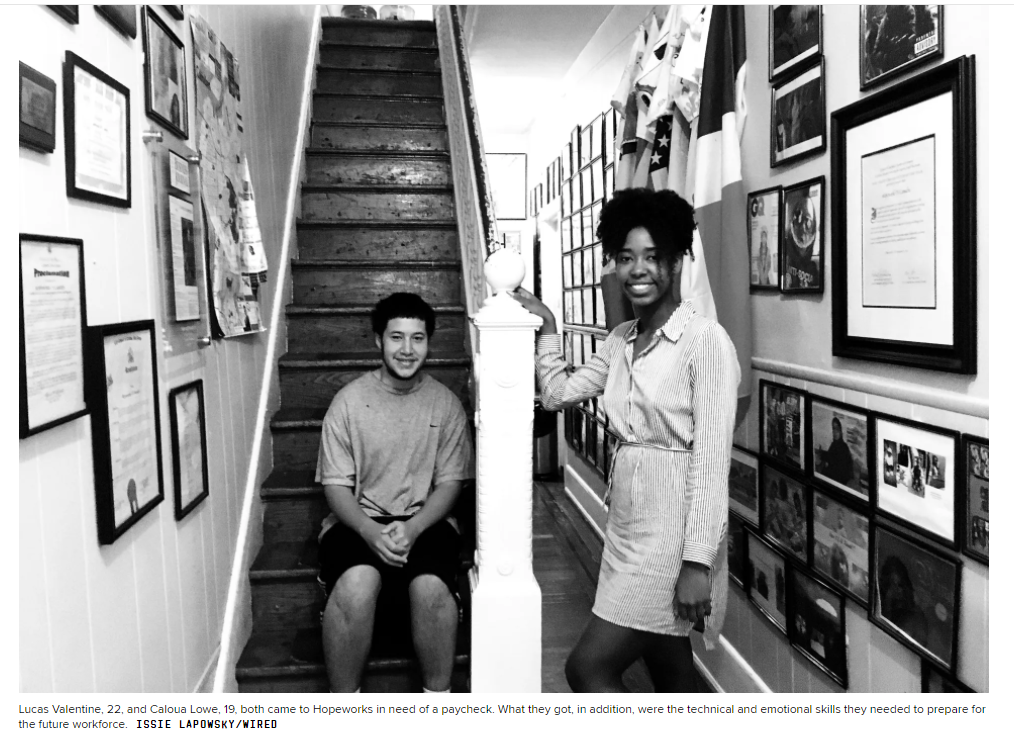
“…Hopeworks ‘N Camden, is not a typical tech-training program. There are no beanbag chairs or foosball tables. There is, however, a framed photo of a bicycling Jesuit priest, Father Jeff Putthoff, who co-founded Hopeworks in 2000. There's also the smell of homemade bread wafting from the kitchen, baked to ensure that no one at Hopeworks, including the 20 to 30 percent of students who are homeless, goes hungry at lunchtime. There's an on-site “life readiness coach,” who is trained in trauma-informed counseling. And there's the $750 that Hopeworks pays students who complete the course, rather than the other way around.”
“With nearly half a million computing jobs going unfilled this year, according to Code.org, everyone from Google to the White House is eager to emphasize tech training. It's offered in the name of closing the so-called “skills gap,” and giving a more diverse set of people, beyond Silicon Valley and New York City, a crack at lucrative careers in tech. But Hopeworks’ founders and staff recognized nearly two decades ago that propelling people into the tech workforce from communities like Camden, notorious for its high rates of poverty and crime, requires a lot more than just teaching them to code.”
“The American Psychological Association recognizes that poverty and exposure to violence at a young age can be linked to post traumatic stress disorder in young adults. So Hopeworks' leaders believe that to prepare their students for work, teaching them social and emotional coping skills is at least as important as teaching them Javascript.”
“On average, 78 percent of students complete the tech training, and within a year, 60 percent are employed either full-time, or part-time while finishing college, according to Rhoton. Last year, 55 students finished the program, and 59 students and interns landed jobs.”
“‘Our mission is not to fill tech jobs. Our mission is to change the trajectory of lives.”’